Table of contents
- 1 . Why Generic Social Media Strategies Fail Brands?
- 2. Common Mistakes in One-Size-Fits-All Marketing Most Brands Fall Into Without Knowing
- 3. What “Tailored Social Media Strategies for Brand Success” Actually Means in Practice
- 4. How to Fix Failing Social Media Strategies (Step-by-Step for Brands That Are Tired of Wasting Time)
- 5. The Real Benefits of Custom Social Media Plans for Brands (Numbers Don’t Lie)
- 6. How to Start Building a Brand-Specific Social Strategy Today (Without Overthinking It)
- Final Thought
- Frequently Asked Questions
You know that moment when a tailor gives you an agbada meant for a 6-foot man and you’re 5’7″? That’s exactly what happens when brands use generic social media strategies copy-pasted from a template online.
In 2024, Sprout Social reported that 57% of consumers will unfollow a brand that posts irrelevant content. E shock you? It should. Because why generic social media strategies fail brands is not just a marketing question, it’s a survival question.
The truth is, one-size-fits-all thinking is the fastest road to a dead page, zero engagement, and confused customers.
Let’s talk about it properly.
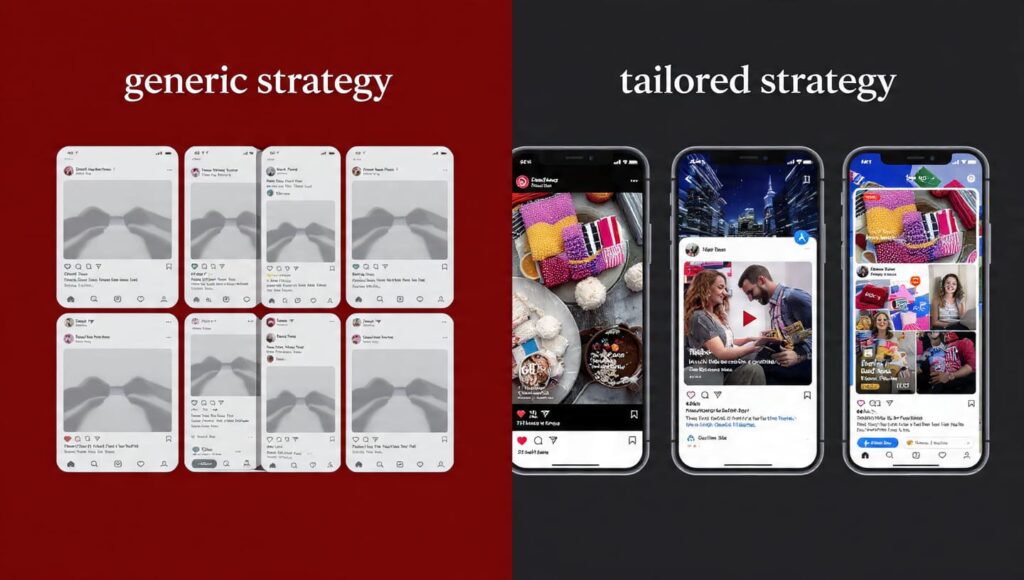
1. Why Generic Social Media Strategies Fail Brands?
There’s this popular saying in marketing circles: “If you’re talking to everyone, you’re talking to no one.” Coca-Cola does not sell the same way to a Lagos street vendor as it does to a New York executive.
Yet somehow, countless brands in Nigeria and across Africa keep running the same Instagram post schedule, the same “motivational Monday” captions, and the same recycled content formats, regardless of whether they sell luxury skincare, agro-commodities, or fintech services.
The reasons universal social plans hurt your business go deeper than aesthetics. They affect your algorithm performance. According to HubSpot’s 2024 Social Media Report, brands that post platform-specific, audience-aligned content see up to 3x more engagement than those using recycled cross-platform formats.
Three times! Meanwhile, you’re sitting there wondering why nobody liked your post.
The issue isn’t your product. It’s your approach. Algorithms on Instagram, TikTok, LinkedIn, and X are all built differently. Instagram rewards saves and shares. LinkedIn rewards long-form thought leadership. TikTok rewards entertainment and audio trends.
If you post the same 30-second promotional clip on all four platforms with the same caption, The algorithm will humble you fast.
Understanding why your content looks good but still gets low engagement is the first step. Generic content is often visually fine. But without audience intent and platform-specific optimization, it dies quietly.
2. Common Mistakes in One-Size-Fits-All Marketing Most Brands Fall Into Without Knowing
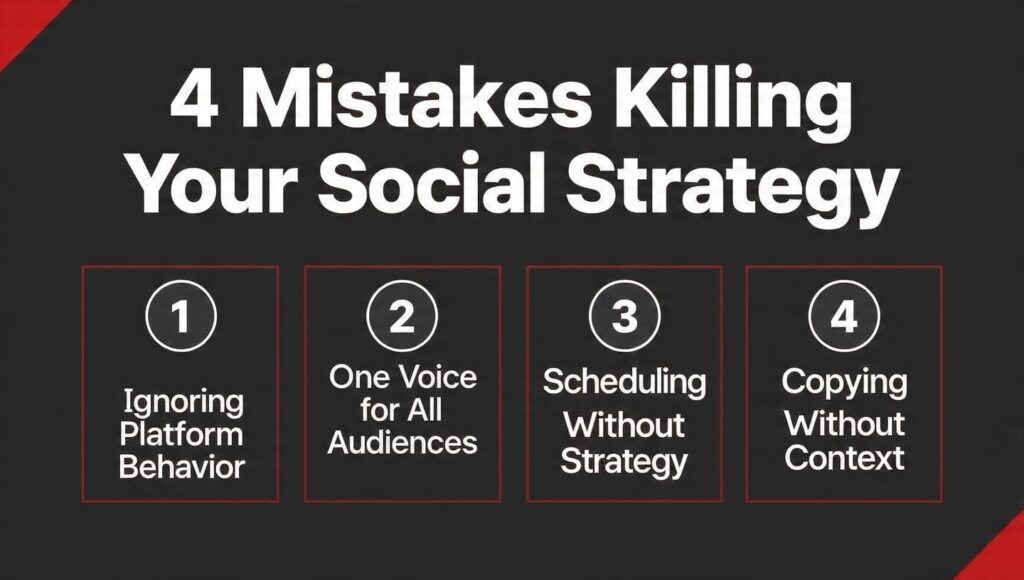
Cookie-cutter social media is lazy marketing dressed in a scheduling tool. And the top failures of uniform social media marketing don’t just show up in your analytics. They show up in your sales pipeline, your customer trust, and your brand perception.
Mistake #1: Ignoring platform-native behavior
A brand that posts LinkedIn-style long captions on TikTok will be scrolled past faster than you can say “brand awareness.”
TikTok users want native, raw, entertaining content not corporate announcements with stock photos. The risks of non-customized social campaigns here are real: lower reach, lower saves, and a confused algorithm that stops pushing your content.
Mistake #2: Using one brand voice for every audience segment
A 22-year-old Gen Z buyer doesn’t speak the same language as a 45-year-old SME owner in Port Harcourt. Both might follow you. But if your captions only resonate with one, you’ve lost the other. Hidden brand judgment signals customers use often include your tone of voice, and people decide if they trust you within seconds of reading your bio.
Mistake #3: Scheduling without strategy
Many brands mistake consistency for strategy. Posting every day is not a strategy. Posting the right content, at the right time, on the right platform, to the right audience, that’s a strategy.
The pitfalls of using the same social strategy everywhere often start here: someone set up a scheduling tool, connected all platforms, and called it a day. E no work like that.
Mistake #4: Copying competitors without context
What works for a brand in the US tech space will not automatically work for a Yoruba fashion house in Ibadan. Different markets. Different audience psychology. Different platform habits. Errors in applying generic social media to brands compound when businesses skip the research phase entirely.
3. What “Tailored Social Media Strategies for Brand Success” Actually Means in Practice
Tailored social media doesn’t mean you need a 40-page brand strategy document and a team of 12. It means you understand three things clearly: who your audience is, where they live online, and what content moves them to act.
Building brand-specific social media plans starts with what marketers call an Audience Persona, a detailed profile of your ideal follower/customer. Age, location, income bracket, online behavior, favorite content format, buying triggers.
Once you have that, everything else gets easier. Your captions change. Your hashtags change. Your posting times change. Your platform priority changes.
For example a Lagos-based restaurant doesn’t need to be on LinkedIn at all. But they absolutely need a killer TikTok presence, strong Instagram reels, and possibly a WhatsApp broadcast list. Whereas a B2B software company should be prioritizing LinkedIn thought leadership and Twitter/X threads targeting decision-makers. Same Nigeria. Same internet. Very different strategies.
Personalizing social strategies to boost engagement also means studying your data. Not just vanity metrics like follower count, but engagement rate, reach per post, save rate, click-through rate, and story replies.
These numbers tell you what’s actually working. And if you want to understand what real social media growth looks like before the strategy even launches, this post on what real social media growth feels like in Nigeria gives you a ground-level picture.
Pro Tip: Creating targeted social media tactics for businesses always begins with an audit of your existing content. Pull your last 30 posts. Sort them by engagement. The patterns you find will tell you more than any template ever will.
4. How to Fix Failing Social Media Strategies (Step-by-Step for Brands That Are Tired of Wasting Time)
Okay, so now you know what went wrong. The question is, how do you fix it? Turning around generic social media failures requires both strategy and humility. You have to be willing to throw out what isn’t working, even if you spent three months building it.
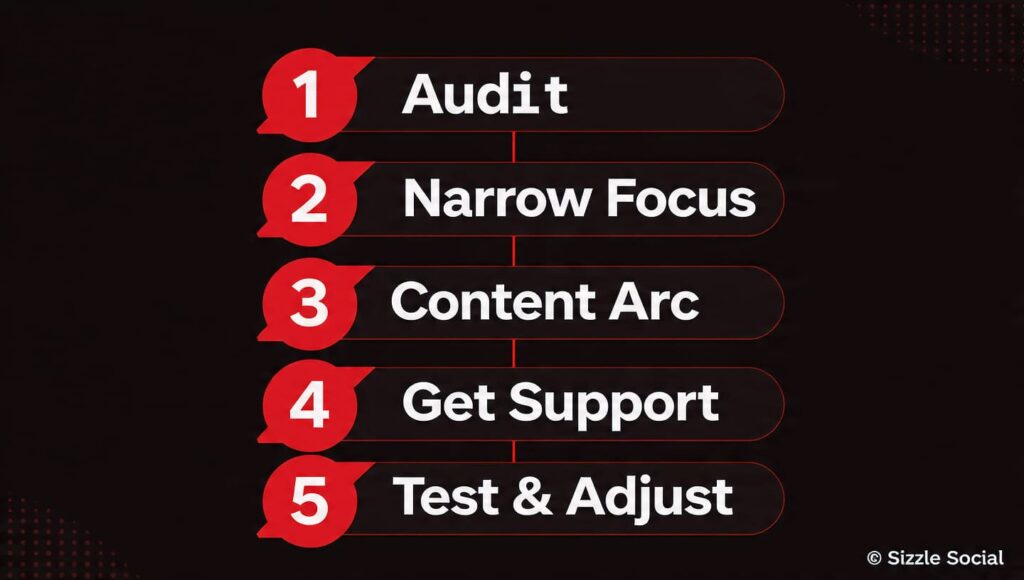
Step 1: Conduct a Full Social Media Audit
Go through every platform you’re active on. Note your top 5 performing posts by engagement. Note your 5 worst. Look for patterns, content type, caption length, day posted, topic.
This alone will show you where the broken social media approaches are hiding.
Step 2: Narrow Your Platform Focus
Improving poor social media performance quickly often starts with doing less, better. Pick 2–3 platforms where your audience actually exists.
Build depth there before spreading thin across six platforms with zero traction. This is revamping social media strategy 101, focus beats frequency, always.
Step 3: Create Platform-Specific Content Pillars
Not one content plan for everything. Each platform should have 3–5 content themes that serve its native user behavior. Instagram? Visual storytelling and behind-the-scenes. TikTok? Trends, education, entertainment. LinkedIn? Insights, case studies, wins.
Step 4: Invest in the Right Support
Here’s where brands often trip, they try to DIY everything while also running a business. This is where Sizzle Social steps in. Sizzle Social specializes in building brand-specific social media growth plans designed around your business goals, not a recycled template.
Whether it’s growing your Instagram from scratch or fixing a stalled TikTok presence, their team creates targeted social strategies that actually convert. See how Nigerian brands are growing their Instagram followers here.
Step 5: Test, Measure, Adjust, Monthly
Steps to overhaul your ineffective social plan don’t end with execution. Social media is a living thing. What works in January might flop in April. Build a monthly review habit into your process.
5. The Real Benefits of Custom Social Media Plans for Brands (Numbers Don’t Lie)
Why tailored social media grows your brand faster isn’t just a theory, the data backs it up consistently. A 2023 Salesforce State of Marketing Report found that high-performing marketing teams are 2.4x more likely to use audience segmentation and personalized content than underperformers. That’s not a small margin. That’s the difference between scaling and stagnating.
The gains from brand-specific social media marketing show up in multiple ways:
- Higher engagement rates: content that speaks directly to your audience gets more comments, shares, and saves. The algorithm interprets this as quality and pushes your content further.
- Better conversion: when your social media speaks the language of your ideal buyer, it pre-sells them before they even visit your website. The Instagram growth for Nigerian startups article breaks this down further for business owners.
- Stronger brand identity: bespoke social plans create consistency in voice, visual identity, and messaging that builds brand recognition over time. People start to know your brand by the way it shows up, not just by your logo.
- Lower content waste: when every post has a purpose tied to your brand goals, you stop creating for the sake of posting. Less noise, more signal.
The ROI of customized vs generic social tactics becomes obvious within 90 days of implementing a proper tailored strategy. Many brands that have worked with structured, personalized social plans report a 20–40% increase in organic reach within the first quarter of consistent execution. That’s not magic. That’s strategy doing its job.
And honestly? The advantages of personalized social strategies extend beyond metrics. When your audience feels seen, heard, and spoken to directly, they become loyal.
They defend your brand in comment sections. They tag friends. They become free brand ambassadors. No ad budget replicates that energy.
To understand the full scope of what visibility signals attract organic growth and influencer attention, check this post on the Instagram visibility signals that attract influencers massively.
6. How to Start Building a Brand-Specific Social Strategy Today (Without Overthinking It)
You don’t need six months and a big budget to start adapting social media to fit your brand’s needs. You need clarity, consistency, and the right tools.
Here’s how to start right now, even if you’re starting from scratch.
Know your one sentence. What does your brand do, for whom, and why does it matter? If you can’t answer that in one sentence, your social media will never be clear either. This is the foundation of creating targeted social media tactics for businesses.
Choose one platform and go deep. Stop spreading thin. Choose the one platform where your target customer spends the most time. How to grow Instagram followers from 0 to 10K in Nigeria is a solid starting point if Instagram is your platform.
Build a content rhythm, not a content calendar. Rhythm means you understand your audience’s appetite, when they’re most active, what format they prefer, what triggers engagement. A calendar just has dates. Rhythm has intention.
Leverage data from day one. Even if your account is small, track your metrics weekly. Engagement rate benchmarks for Instagram in Nigeria currently hover around 1.5% to 3.5% for small-to-mid size brand accounts. If you’re below that, something needs adjusting. Why your social media growth is slow in Nigeria breaks down exactly what benchmarks to watch.
Partner with the right growth infrastructure. Organic growth is powerful. But there are moments, especially for new brands, where a strategic boost helps content reach its intended audience faster. Sizzle Social’s proven Instagram growth methods offer both organic and supported growth strategies tailored to Nigerian and African brands.
The truth is, building brand-specific social media plans is not a one-time event. It’s an ongoing discipline. But once you break free from the cookie-cutter social media trap, the results, the real ones, start showing up. Engagement rises. DMs come in. Sales conversations happen. And suddenly, your social media is no longer a chore. It’s an asset.
Final Thought
Why generic social media strategies fail brands comes down to one simple thing: people connect with brands that understand them. Not brands that post daily. Not brands that use every trending audio. Brands that get them. If your current strategy is a copy-paste job from a template you found in 2021, it’s time to retire it.
Start tailored. Stay consistent. Track everything. And if you’re ready to stop guessing and start growing, you already know where to look.
Frequently Asked Questions
Generic social media strategies fail brands because they ignore the critical differences between platforms, audience segments, and brand identities. A strategy built for one type of business or audience cannot serve another effectively. Each platform Instagram, TikTok, LinkedIn, X has its own algorithm, content culture, and user behavior. When brands use the same content across all platforms without adaptation, algorithms deprioritize the content, engagement drops, and audiences disengage. Additionally, generic messaging fails to create the emotional connection that drives loyalty and conversions. According to Sprout Social, 57% of consumers will unfollow a brand that shares irrelevant content making personalization not optional, but essential.
A tailored social media strategy is a customized content and growth plan built specifically around a brand’s unique identity, target audience, business goals, and preferred platforms. Unlike a template-based approach, a tailored strategy considers the buyer persona in detail, their demographics, behavior, content preferences, and buying triggers. It defines platform-specific content pillars, posting rhythms, tone of voice, and engagement tactics that align with how the audience actually behaves online. Tailored strategies are continuously tested and adjusted based on performance data, ensuring the brand’s social media activity directly supports business growth rather than just filling a content calendar.
The biggest mistakes include: posting the same content across all platforms without adaptation, using one brand voice for all audience demographics, scheduling content without a strategic framework, and copying competitor strategies without understanding the context or audience differences. Brands also frequently neglect platform-native behaviors for example, posting LinkedIn-style captions on TikTok or using static images on a platform that rewards video. These mistakes result in low engagement, poor algorithm performance, audience confusion, and wasted content budgets. The compounding effect is a social media presence that looks active on the surface but drives no meaningful business result.
Key signs your social media strategy is failing include: consistently low engagement rates (below 1% on Instagram), declining reach despite regular posting, zero conversions or leads from social channels, a follower base that doesn’t match your ideal customer profile, and content that receives no saves, shares, or comments. You can also check your platform insights for reach-to-impression ratio if your content is reaching fewer unique accounts over time, the algorithm is deprioritizing you. Other indicators include a high follower count with very low engagement (a sign of misaligned audience) and irrelevant comments or DMs that suggest your content is attracting the wrong audience.
A full social media audit should be conducted at minimum every quarter, that is, every three months. However, for brands in fast-moving markets or those actively scaling, a monthly mini-audit is more effective. This involves reviewing your top and bottom-performing posts, checking engagement rate trends, analyzing follower growth or decline, and assessing whether your content pillars are still aligned with your business goals. Quarterly audits should also include a competitive analysis to benchmark your performance against relevant brands in your niche or market. Annual strategy reviews should address bigger shifts like platform algorithm updates, audience demographic changes, and evolving brand positioning.
The right platforms depend on your target audience and business type. For consumer brands (fashion, food, beauty, lifestyle) targeting younger demographics (18–35), Instagram and TikTok are the highest-priority platforms in Nigeria. For B2B companies, professional service providers, or brands targeting decision-makers, LinkedIn and X (Twitter) offer more qualified reach. WhatsApp remains uniquely powerful in Nigeria for direct customer engagement, broadcast lists, and community building. YouTube is effective for longer educational content and brand storytelling. The key is not to be everywhere, but to be fully present and strategic on the 2–3 platforms where your ideal audience is most active.
Absolutely, in fact, small brands benefit more from tailored strategies than large ones. Large brands have advertising budgets that can compensate for poor targeting. Small brands don’t have that luxury. A tailored social media strategy allows a small brand to compete effectively by being hyper-relevant to a specific audience rather than trying to appeal to everyone. It also makes every piece of content count, since smaller brands can’t afford to waste resources on posts that don’t perform. Starting with a clear audience persona, two to three platform-specific content pillars, and consistent messaging can produce significant organic growth even with a small following.
Most brands begin to see measurable improvement in engagement and reach within 30 to 60 days of implementing a properly tailored social media strategy. However, significant business results leads, sales conversations, and meaningful follower growth, typically emerge within 90 days. This timeline assumes consistent execution, regular performance reviews, and willingness to adjust tactics based on data. Brands that have been using generic strategies for a long period may experience a short “reset phase” where older audiences disengage as content becomes more targeted, before new, more relevant audiences build. Patience and consistency during this transition period are critical to long-term success.
According to the 2023 Salesforce State of Marketing Report, high-performing marketing teams that use audience segmentation and personalized content are 2.4 times more likely to outperform their peers. Brands implementing tailored social strategies consistently report 20–40% increases in organic reach within the first quarter. Beyond reach, the quality of the audience matters more than size; a tailored strategy attracts followers who are more likely to convert into customers, reducing the cost per acquisition significantly. The ROI of customized social tactics is also cumulative: the longer you execute a consistent, brand-specific strategy, the stronger your algorithm authority and audience trust become.
Sizzle Social (sizzlesocial.ng) specializes in building brand-specific social media growth plans for Nigerian and African brands. Their team creates customized Instagram, TikTok, and multi-platform strategies designed around your specific business goals, target audience, and brand identity, not recycled templates. Whether you’re starting from zero or looking to revamp a stagnant social presence, Sizzle Social offers both organic growth strategies and supported boost services tailored to the Nigerian market. You can explore their Instagram growth resources at sizzlesocial.ng or reach out directly to discuss a custom plan for your brand.