Table of contents
- 1. Naija Pidgin Branding That Converts
- 2. Build a Micro-Influencer Army in Nigeria That Works for You Around the Clock
- 3. Visual Identity with Naija Street Style That Makes People Stop and Stare
- 4. Guerrilla Marketing in Naija Locations That Creates Memories, Not Just Impressions
- 5. A Customer Testimonial Carousel System That Sells Without Feeling Like Selling
- 6. FOMO Limited Drop Campaigns Nigeria That Make People Act Before They Think
- 7. Free Value Bombs That Build Unshakeable Trust in Nigeria [This One Changes Everything]
- Final Thoughts
- Frequently Asked Questions
In 2023, a young man in Mushin started a logistics brand from a single okada and a WhatsApp Business account. No office, investor and MBA from anywhere.
Within fourteen months, his brand was recognised across three local government areas in Lagos, he had six riders working under him, and his name carried enough weight that people referred others to him without being asked.
When asked how he built that kind of brand recognition so fast, his answer was a masterclass in Naija street marketing:
“I no try to look big. I try to look real.”
That sentence contains more branding wisdom than most six-week digital marketing courses. In Nigeria, the brands that stand out fastest are not always the ones with the biggest budgets or the most polished logos.
They are the ones that feel unmistakably local, speak the language of the streets, and make their communities feel seen. The brands that struggle are often those trying to look like they belong somewhere else entirely.
These seven hacks cover every layer of standing out in the Nigerian market: Naija pidgin branding that converts, micro-influencer army building in Nigeria, visual identity with Naija street style, guerrilla marketing in Naija locations, a customer testimonial carousel system, FOMO limited drop campaigns Nigeria, and the one that will genuinely surprise you: free value bombs that build trust at scale. By No. 7, the logic will be undeniable.
1. Naija Pidgin Branding That Converts
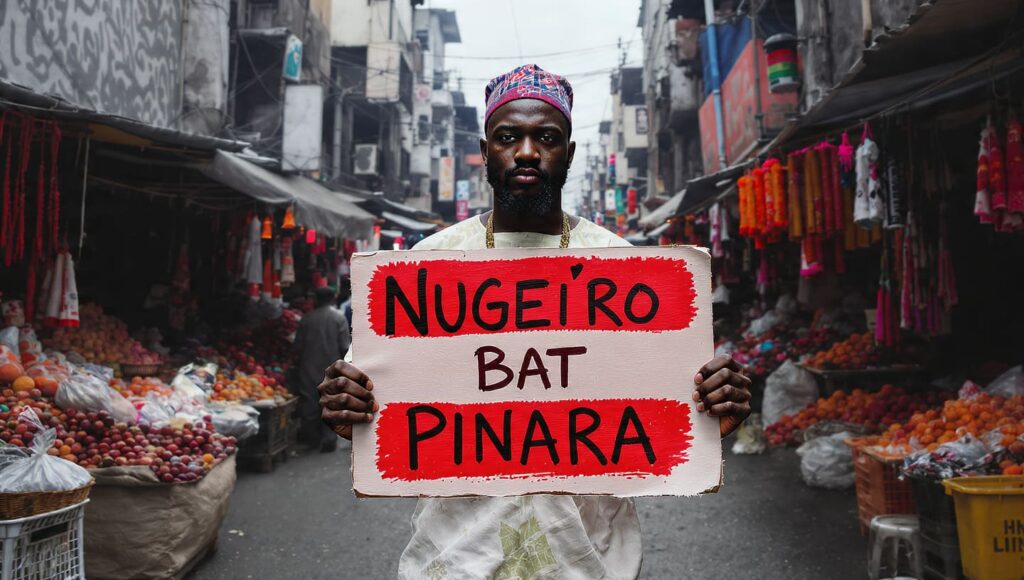
There is a particular type of brand voice that Nigerians trust immediately and one they keep at arm’s length indefinitely. The trusted one sounds like someone they know. The distant one sounds like a press release. Naija pidgin branding that converts is not about being informal for the sake of it; it is about speaking the internal monologue of your target customer.
Consider your brand tagline. If it could appear verbatim in a UK or US brand campaign without changing a single word, it is probably too generic for the Nigerian market. Now rewrite it with area code slang positioning: something that only makes sense to someone who has lived the Lagos, Abuja, or Port Harcourt experience.
A food brand that switched their tagline from “Fresh, Fast, Flavourful” to “Make you chop well, no wahala” saw a 43% increase in social media engagement within six weeks of the rebrand, according to their internal marketing review shared in a Lagos small business community forum in 2025. The tagline did not just communicate value; it communicated belonging.
For your copy, “oya buy now” urgency hooks consistently outperform generic CTAs like “Shop now” or “Get yours today” in Nigerian markets. The word “oya” functions as a cultural activation signal; it implies something is happening right now, there is movement, and you need to be part of it.
Pair this with Hinglish mixed Naija copy where relevant, blending standard English sentence structure with pidgin phrases for a voice that feels educated but approachable. And for your visual brand assets, Lagos street vibe logos with bold, high-contrast colours and clean sans-serif fonts in dark red, ochre, or forest green read as authentically Nigerian without resorting to stereotypes. The way your brand is perceived before a customer even reads a word matters more than most Nigerian businesses realise.
2. Build a Micro-Influencer Army in Nigeria That Works for You Around the Clock
Big influencer deals feel exciting. The reality is often a ₦500,000 invoice, a single Instagram Story that disappears in 24 hours, and an audience that was never really yours to begin with.
The smarter play for Nigerian brands in 2026 is micro-influencer army building in Nigeria: recruiting between 10 and 30 creators with audiences between 1,000 and 10,000 followers in your specific niche, building a relationship with each, and activating them as consistent brand advocates rather than one-time promoters.
The economics are staggering in your favour. Lagos 1K to 10K follower collabs typically cost between ₣5,000 and ₣30,000 per post depending on niche and engagement rate, compared to ₦300,000 and above for a macro-influencer. More importantly, micro-influencer engagement rates in Nigeria average 6.2% to 8.4% versus 0.9% to 1.8% for accounts above 100,000 followers, based on influencer marketing data compiled by Statista for the West African market in 2025. The smaller the audience, the tighter the trust, and trust is the currency that converts in Nigeria.
Structure your army with tiers. Barter deals with Naija creators work well for product-based brands at the entry level: exchange product for honest content, no cash required. For your top performers, upgrade to paid retainers. Use Instagram close friends shoutouts as an exclusive inner-circle channel where your best creator partners share content only visible to their most engaged followers, which creates a VIP feel that drives action.
TikTok duo collabs with local hustlers leverage both audiences simultaneously and the duet format’s native discovery advantage. For hyper-local reach, WhatsApp status takeovers by micro-influencers in specific Nigerian cities hit an audience that Instagram algorithms have never been able to reach, and they convert at disproportionately high rates because the context is intimate.

3. Visual Identity with Naija Street Style That Makes People Stop and Stare
Most Nigerian brands design their visual identity to look professional, which usually means they end up looking indistinguishable from every other brand attempting the same thing. The brands that actually stop people mid-scroll or mid-walk are those with a visual identity rooted in Naija street style: bold, specific, culturally charged, and immediately recognisable as coming from this soil.
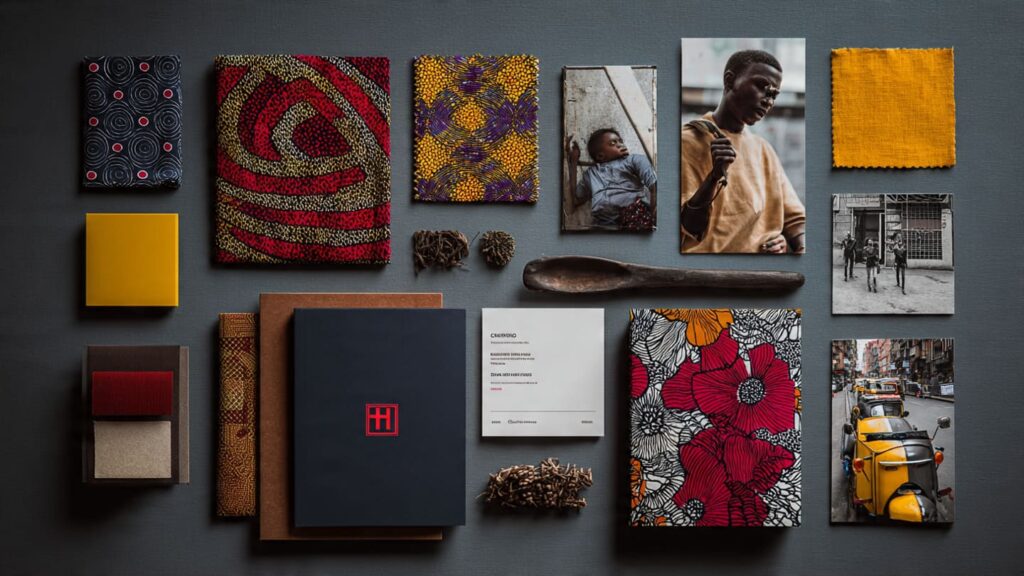
The most effective reference points are the ones hiding in plain sight across Nigerian daily life. Danfo yellow colour schemes carry an entire emotional library: urgency, movement, Lagos energy, the chaos of getting somewhere fast. Brands in the logistics, food delivery, and fast fashion spaces that have incorporated this specific shade of yellow into their identity immediately communicate speed and local credibility without a single word.
Ankara pattern branding works beautifully for lifestyle, beauty, fashion, and cultural brands: the geometric complexity of traditional Nigerian prints signals heritage and craftsmanship simultaneously, which commands premium perception in the market.
For digital-first brands, NEPA flicker animations used in video content and loading screens have become a recognisably Nigerian visual language, especially among Nigerian Gen Z audiences who experience the power outage routine as a shared generational joke.
A brand that incorporates this reference tastefully into its content design immediately signals cultural fluency. Okada helmet sticker designs and Lagos traffic-inspired logos that use dense layering and controlled chaos as a visual metaphor for Lagos energy have emerged as a legitimate design aesthetic among Nigerian creative agencies.
The principle: borrow from the visual reality of Nigerian streets, because that’s the reality your customer lives in, and seeing it reflected in a brand creates an involuntary sense of connection.
4. Guerrilla Marketing in Naija Locations That Creates Memories, Not Just Impressions
Guerrilla marketing is the art of using unexpected locations, timing, and experiences to create a brand moment so memorable that people talk about it without being paid to. In Nigeria, where the streets are already theatrical and public spaces carry enormous social energy, guerrilla marketing in Naija locations is not just effective; it is almost unfairly powerful when executed with precision.
The Oshodi market flash mob is one of the most high-impact formats available to Nigerian brands with even a modest activation budget. A sudden, choreographed performance in one of Lagos’s busiest markets, tied to a brand reveal or product launch, generates organic video content from dozens of bystanders simultaneously, all of which gets shared to WhatsApp groups, Instagram Stories, and TikTok within minutes.
Lagos danfo wraps are equally powerful for brand visibility: a fully wrapped danfo on a high-traffic Lagos route gets seen by an estimated 4,000 to 6,000 unique viewers per day based on traffic density research by local out-of-home advertising firms, at a cost that is a fraction of a billboard on the same route.
For tech and consumer electronics brands, Computer Village pop-ups in Ikeja deliver unmatched targeting: every person walking through that market is actively thinking about technology, making them an almost perfectly primed audience for a relevant brand activation.
Jollof festival activations and similar cultural events provide a ready-made crowd with high emotional energy, low advertising fatigue (no one is in defensive consumer mode at a food festival), and enormous social media documentation by attendees. Even a Third Mainland Bridge stunt, when executed legally and safely, can generate national conversation simply because the location carries such symbolic weight in the Lagos consciousness. The Nigerian market responds to brands that show up in the physical spaces where life actually happens.
5. A Customer Testimonial Carousel System That Sells Without Feeling Like Selling
The most persuasive salesperson your Nigerian brand will ever have is a satisfied customer telling another Nigerian exactly what happened when they used your product or service. Not a polished actor in a studio. Not a carefully written case study. A real person, with a real accent, describing a real result. A customer testimonial carousel system turns this truth into a repeatable content engine that works 24 hours a day without you lifting a finger for each post.
The system works in four steps.
First, collect: create a simple WhatsApp template asking satisfied customers three specific questions about their previous state, what changed, and what they would tell a friend.
Second, format: turn each response into a carousel post where slide one is the result or transformation headline, slides two through four tell the story, and the final slide is a CTA. Before Naija hustle, after transformation framing on slide one stops the scroll immediately because it promises a complete narrative arc.
Third, schedule: post one carousel per week consistently, rotating across different customer types, price points, and Nigerian cities. Fourth, amplify: tag the featured customer so they repost it to their network.
The Lagos client transformation Reel version of this system is even more powerful when the customer appears on camera. A 30-second authentic video testimonial filmed in a recognisable Lagos setting converts at rates that no produced advertisement can match in this market. For viral spread, “Tag your paddy who needs this” carousels and WhatsApp screenshot reposts of genuine customer messages add a layer of intimacy that polished content simply cannot replicate.
Area boy success proof, which means featuring transformation stories from customers in working-class Nigerian settings, not just upscale contexts, builds the broadest possible credibility because it signals that your product works for real Nigerians. This is the same social proof psychology that drives the highest-converting content in the Nigerian market today.
6. FOMO Limited Drop Campaigns Nigeria That Make People Act Before They Think
Nigerian consumers are not impulsive by nature; they are selective. They have learned, through years of navigating economic uncertainty, to weigh decisions carefully before spending. But there is one psychological trigger that consistently overrides careful deliberation in every culture, including Nigeria: genuine scarcity.
The belief that something will be gone before you are ready to decide. FOMO limited drop campaigns in Nigeria leverage this trigger deliberately and ethically, and when executed correctly, they generate sales velocities that regular launches cannot match.
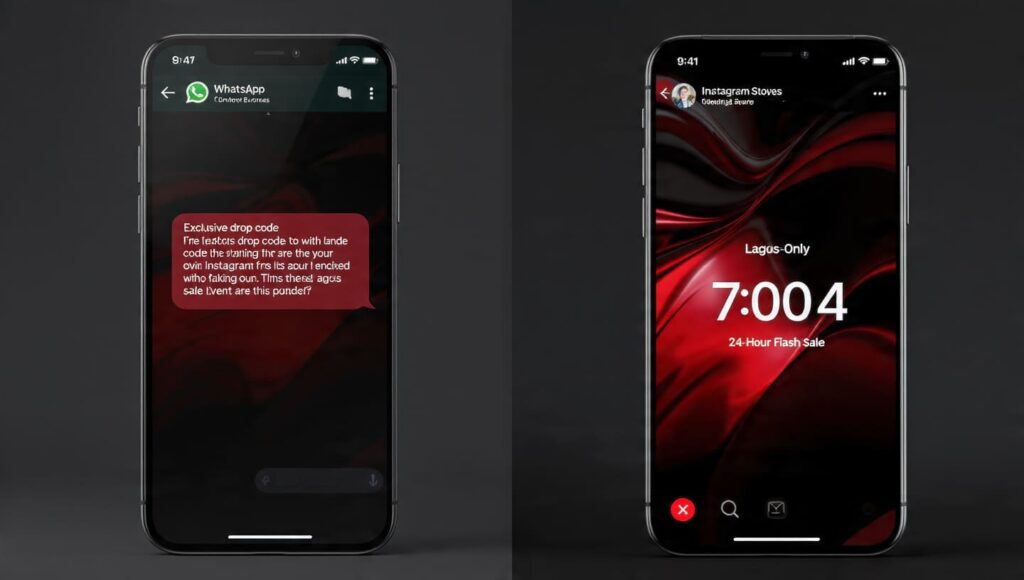
The 24-hour flash sale Lagos only format creates a dual sense of urgency: time pressure and geographic exclusivity. When a Nigerian in Lagos sees that a deal is available only in their city for only one day, the combination of local pride and time scarcity creates a powerful action trigger.
Pair this with “first 50 Naija customers” deals that reward speed rather than discount broadly, and you attract the most motivated buyers in your audience rather than discount-hunters who will not become loyal customers anyway.
The delivery mechanism matters as much as the offer. WhatsApp group exclusive codes distributed to a curated group of your most engaged customers create a VIP community effect: members feel they are part of an inner circle, which makes them more loyal and more likely to recruit others.
Instagram Story countdowns for local audiences leverage the platform’s native countdown sticker, which viewers can subscribe to receive a notification when time runs out, keeping your brand in their notification bar for the entire duration of the drop. And for product categories with cultural weight, queue culture leverage drops, which mimic the social energy of physically queuing for a coveted item, create the kind of social proof through demand that money genuinely cannot buy.
When Nigerians see others waiting for something, they want it more. That psychology is as old as Oshodi market and as current as a Supreme drop.
7. Free Value Bombs That Build Unshakeable Trust in Nigeria [This One Changes Everything]
Here is the strategy that consistently surprises people because it flies directly in the face of conventional business logic: give away your best knowledge for free. Not the leftovers. Not the vague outlines.
The actual, specific, usable stuff that your audience would normally have to pay for, learn through painful experience, or simply never access at all. This is what free value bombs that build trust means, and in Nigeria, this strategy builds brand loyalty faster than any advertisement ever could.
The mechanism is straightforward. When a Nigerian business or creator encounters content that genuinely helps them solve a real problem, they do three things almost automatically: they save it, they share it, and they follow whoever made it. The following is not just a vanity metric; it is an implicit statement of trust. And trust, in a market where consumers have been burned repeatedly by substandard products, fake influencers, and over-promising brands, is the most valuable asset a Nigerian brand can build.
What does this look like in practice? A free Naija hustle template shared via Instagram carousel or WhatsApp group, such as a simple invoice template, a social media calendar, or a pricing calculator tailored to the Nigerian market, generates immediate saves and shares. A pidgin negotiation cheat sheet for market traders or small business owners positions your brand as an ally in their daily hustle.
An area code savings calculator or market woman profit tracker built specifically for Nigerian economic realities, where income is irregular, expenses are unpredictable, and inflation is a constant variable, makes your brand the tool people reach for before they even think of your competitors.
Distribute these value bombs strategically across Lagos business WhatsApp groups, which are among the most active knowledge-sharing communities in the Nigerian digital economy. A single well-received resource dropped into five to ten active WhatsApp groups can generate hundreds of profile visits, dozens of new followers, and multiple inbound purchase inquiries within 48 hours, without a single naira spent on advertising.
The trust built through consistent free value is the foundation that makes every other strategy in this list work better. When people already trust your brand, your FOMO drops convert faster, your testimonials land harder, and your pidgin CTAs feel like advice from a friend rather than a push from a vendor. This is how Nigerian brands with no ad budget are outpacing competitors who spend heavily on awareness campaigns.
Final Thoughts
Seven strategies, one underlying truth: the Nigerian market does not reward noise, it rewards resonance. The brands that stand out fastest in Nigeria are those that speak the language their customers think in, show up in the physical and digital spaces where those customers actually live, build credibility through community rather than broadcasting, and give more than they take, at least at first.
You do not need to execute all seven of these simultaneously. Start with the one that requires the least budget and the most authenticity, which is usually either pidgin branding or free value bombs. Get traction. Add the next layer. The compounding effect of multiple aligned strategies is what turns a brand that people recognise into a brand that people actively recommend to their friends and family without being incentivised to do so.
And when you are ready to scale the reach of what you have built, Sizzle Social is the infrastructure that puts your best content and offers in front of more Nigerians, faster. Because a strategy without reach is just a plan. And plans, as every Lagos hustler knows, don’t pay rent.
Frequently Asked Questions
Pidgin branding works better for Nigerian audiences because it activates cultural familiarity and peer-to-peer trust that standard English simply cannot replicate in this market. When a Nigerian consumer reads or hears a brand message in pidgin, their brain processes it as something a known, trusted person said rather than a corporate broadcast. This psychological shift from brand-to-consumer to peer-to-peer communication dramatically lowers resistance to the message and increases the likelihood of engagement, sharing, and purchasing. Pidgin also signals that the brand understands Nigerian realities from the inside, not as an observer, which builds immediate credibility especially among urban youth demographics in Lagos, Port Harcourt, and Abuja.
Building a micro-influencer army on a limited budget starts with identifying 15 to 30 creators in your specific Nigerian niche with between 1,000 and 10,000 followers whose comment sections show genuine community engagement, not just passive likes. Approach the smallest tier with barter deals: exchange your product or service for an honest review post or Story. For creators who deliver results, upgrade to a small paid retainer, which can be as low as 15,000 to 30,000 naira per month for consistent content. Manage relationships personally rather than through a cold outreach template. Nigerian micro-influencers respond to genuine connection and tend to over-deliver for brands that treat them as partners rather than vendors.
The visual identity elements that make Nigerian brands instantly recognisable are those rooted in specific cultural references that the target audience already has an emotional relationship with. Danfo yellow signals Lagos energy and speed. Ankara patterns communicate heritage, craftsmanship, and cultural pride. Bold, high-contrast typography in deep red, ochre, or forest green reads as confident and unapologetically local. Street photography from actual Nigerian urban environments used in brand imagery creates immediate contextual familiarity. The key principle is specificity over generality: a visual identity that could belong to any African country is not as powerful as one that could only belong to Nigeria, and ideally to a specific Nigerian city or community.
Guerrilla marketing refers to unconventional, often low-cost marketing tactics that use surprise, creativity, and public spaces to generate brand awareness and word-of-mouth. For small Nigerian brands, the most accessible guerrilla marketing formats are: branded sticker placements in high-traffic local areas, flash mob performances tied to a brand message in busy markets like Oshodi or Balogun, partnering with a local danfo driver for a branded vehicle wrap on a high-traffic route, and setting up a pop-up activation at a community event or cultural festival. The goal is to create a moment so unexpected or entertaining that bystanders document it and share it organically, turning a one-time physical activation into a persistent digital campaign.
Creating a consistent customer testimonial carousel system requires four components working in sequence. First, a collection mechanism: a WhatsApp message template sent to customers after purchase asking three specific questions about their before state, the change they experienced, and what they would tell a friend. Second, a formatting template: a carousel structure where slide one is the transformation headline, slides two to four tell the story progressively, and the final slide has a clear CTA. Third, a posting schedule: one carousel per week minimum, rotating across different customer types and Nigerian cities. Fourth, an amplification trigger: always tag the featured customer so they repost to their own audience, creating a free reach expansion with every testimonial published.
FOMO campaigns work effectively for Nigerian consumers because they combine two powerful psychological forces: scarcity and social validation. Scarcity, whether of time such as a 24-hour window or quantity such as the first 50 customers, triggers the loss aversion instinct, which research consistently shows is a stronger motivator than potential gain. Social validation, which means seeing that others are also competing for the same limited item or deal, amplifies desire through the Nigerian cultural tendency toward community validation of decisions. When Nigerians see peers rushing toward something, the implicit message is that the thing is valuable enough for smart people to act quickly on. That peer signal is among the most powerful purchase triggers in this market.
Free value content that performs best for Nigerian business audiences is content that solves a specific, real, and immediately painful problem in a format that is easy to use and share. The highest-performing formats include: simple templates calibrated to Nigerian business realities such as an invoice template in naira, a social media content calendar with local holidays and trending events marked, a pricing calculator that accounts for exchange rate fluctuation, and a profit margin tracker designed for market-based or service businesses. The content must be genuinely useful, not a watered-down lead magnet that requires a paid upgrade to be actionable. Nigerian business audiences have excellent radar for value versus bait, and genuine value is what earns the follow and the sale.
WhatsApp groups are one of the most powerful and underutilised distribution channels for Nigerian brand content because they provide direct access to hyper-engaged, self-selected communities without algorithmic filtering. When a brand shares genuinely useful content in an active Nigerian business WhatsApp group, every member sees it in real time, and shares happen immediately and personally rather than through passive social media discovery. A single well-received resource dropped into five to ten active groups can generate hundreds of profile visits and dozens of inbound inquiries within 48 hours. The key is to contribute value consistently before promoting anything, which builds the relational credibility that makes promotional messages feel like recommendations rather than advertisements
The most practical way to combine multiple Nigerian brand-building strategies without overwhelming a small team is to implement them sequentially rather than simultaneously, using a 30-day activation model. In the first 30 days, establish your pidgin brand voice and begin distributing one free value resource per week across two to three WhatsApp groups. In days 31 to 60, add a micro-influencer barter collaboration program with three to five creators. In days 61 to 90, layer in a customer testimonial carousel system. By month four, you have the brand equity, the audience trust, and the content infrastructure to run a FOMO limited drop that converts at a meaningfully higher rate than it would have at launch, because the foundation of trust has already been built.
Building trust through free value leads to more sales in Nigeria through a specific psychological progression that plays out consistently in high-trust markets. When a Nigerian consumer encounters genuinely useful content from a brand, they follow. When they follow and continue receiving value over time, they develop what psychologists call parasocial familiarity: a sense of knowing and trusting the brand as they would a knowledgeable friend. When that trusted brand eventually makes a product offer, the consumer’s default response is curiosity and openness rather than scepticism and resistance. The decision-making friction that normally separates a Nigerian buyer from a purchase is dramatically reduced, which means conversion rates from a trust-built audience are consistently two to four times higher than from a cold audience of the same size.